

.png)
Direct from Frankfurt, Germany, The Arc Agency’s Debbie Morley explores the global innovations at Light + Building 2026. From the "Be Electrified" movement to the resurgence of lighting as a visible architectural element, these first impressions bridge the gap between European technology and the future of Australian design.
A Global Lighting Ecosystem
Walking into the halls of Messe Frankfurt during Light + Building immediately recalibrates your sense of scale.
The exhibition spans multiple halls, each filled with lighting manufacturers, automation specialists and building technology companies from across the world.
It quickly becomes apparent that this is no longer simply a lighting exhibition.
It is a global platform exploring how lighting, digital infrastructure and building technologies are converging.
Observing the exhibition from an Australian perspective, many of the conversations feel familiar. Sustainability, durability and environmental performance are recurring themes particularly relevant when designing products and projects that must perform in Australia’s demanding climate conditions.
It was also encouraging to see Australian innovation represented internationally. I’m looking forward to meeting with Australian companies bringing expertise in sensing technology and intelligent lighting control to a global audience.
.png?width=2016&height=1512&name=Light%20+%20Building%20Frankfurt%202026%20(2).png)
Photo: Messe Frankfurt GmbH / Pietro Sutera
Atmosphere by Design
One of the highlights of the first day was the guided tour Atmosphere by Design: Sustainable Lighting that Shapes Space.
Led by award-winning German lighting designer Lance Hollman the tour formed part of the World-Architects programme.
The tour brought together architects and interior architects from around the world to explore how lighting design is evolving both technologically and experientially.
One of the more interesting reflections shared during the tour was that luminaires are not simply fixtures they are tools.
Tools that allow designers to create atmosphere within space.
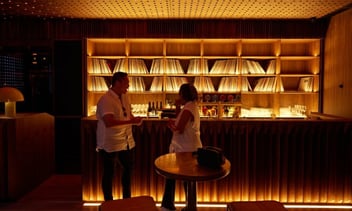
Lighting influences how we experience everyday moments sharing dinner, having coffee, working or connecting with others.
Interestingly, the industry appears to be shifting again in its relationship with form.
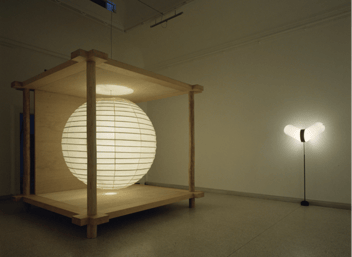
LED technology pushed lighting design toward extreme miniaturisation for many years, reducing luminaires to the smallest possible light source. Now a subtle reversal is emerging, with luminaires becoming slightly larger again allowing them to contribute visually to the architectural identity of a space.
Lighting is once again becoming a visible design element.
.png?width=2016&height=1512&name=Light%20+%20Building%20Frankfurt%202026%20(4).png)
Photo: Messe Frankfurt Exhibition GmbH / Jean-Luc Valentin
Detail, Comfort and the Disappearing Luminaire
Across many of the manufacturers visited during the tour, a consistent theme emerged: precision and visual comfort.
Designers are increasingly focused on delivering glare-free lighting while allowing the luminaire itself to recede quietly into the architecture.
Honeycomb optics, recessed cylinders and concealed lighting elements allow the source of light to remain hidden while producing carefully controlled illumination.
The ambition is simple but powerful.
To create light that enhances architecture without competing with it.
At the same time, subtle design gestures still matter. Rounded edges, carefully resolved housings and refined finishes reveal the craftsmanship behind the technology.
Lighting continues to sit somewhere between engineering and art.
.png?width=2016&height=1512&name=Light%20+%20Building%20Frankfurt%202026%20(5).png)
Photo: DEKO-LIGHT: Profile-within-profile system / Messe Frankfurt Exhibition GmbH / Pietro Sutera
Sustainability Beyond Energy
Sustainability was one of the strongest themes across the exhibition, although the conversation is expanding beyond energy consumption alone.
Manufacturers are increasingly focusing on longevity and durability.
Luminaires designed for demanding environments are being engineered to withstand moisture, chemicals and temperature fluctuations over long lifespans.
For Australian projects, this focus feels particularly relevant given the challenges of coastal environments, high UV exposure and extreme temperature conditions.
Another emerging concept involves wildlife-sensitive lighting, where reduced blue light emissions help minimise disruption to insects and surrounding ecosystems.
Sustainability is increasingly being framed as longevity and environmental responsibility, not just efficiency.
.png?width=2016&height=1512&name=Light%20+%20Building%20Frankfurt%202026%20(6).png) Photo: LedsC4 / light + building 2026
Photo: LedsC4 / light + building 2026
Why It Matters for Australia
For the Australian architecture and design community, several insights emerging from Light + Building feel particularly relevant.
The future of lighting will likely be shaped by:
-
Durable luminaires designed for challenging environments
-
Human-centric lighting focused on wellbeing
-
Smart control systems integrated into broader building ecosystems
-
Customisation enabled through new manufacturing technologies
-
Collaboration between designers, manufacturers and technology specialists
Above all, lighting must serve something deeper than illumination.
It shapes the atmosphere of space.
After only one day exploring Light + Building Frankfurt, one thing already feels clear.
The lighting industry is evolving not just through technology, but through a deeper understanding of how light shapes the environments where people live, work and connect.
If the first day is any indication, the conversations unfolding in Frankfurt this week suggest the future of lighting will be shaped not only by technological innovation, but by how thoughtfully it supports the spaces where people meet, work and connect.
.png?width=2016&height=1512&name=Light%20+%20Building%20Frankfurt%202026%20(7).png)
Photo: Messe Frankfurt Exhibition GmbH / Jean-Luc Valentin
.jpg?width=352&name=Light%20+%20Building%20Frankfurt%202026%20(1).jpg)