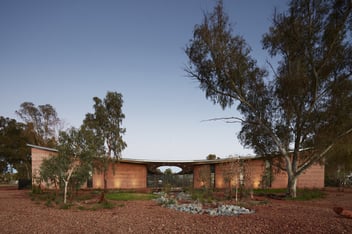



Architects in Australia are under huge pressure in 2026.
When brand reps show up organised, honest and helpful, they become part of the solution – not another problem to manage.
Here is what architects actually want from brand reps now, based on current data and industry research.
1. Help them manage cost, risk and compliance

What the research says
The Systemic Risks in the Australian Architecture Sector report points to escalating legal exposure, complex regulations and tough insurance conditions for architects. (Architects Registration Board Victoria)
ACA’s Pulse Check surveys add the everyday reality – cost escalation, cancellations, timeline blowouts and fee pressure are among the most pressing challenges for practices nationally. (ACA Australia)
At the same time, state regulators and insurers are offering CPD on PI insurance, contracts and risk management. That is a clue: risk is now central to the job. (NSW Architects)
What architects want from reps
Brand reps who stand out are the ones who:
-
Give realistic prices and lead times, and update them promptly when things change.
-
Are upfront about supply risk – what is stocked locally, what is imported, where delays are likely.
-
Explain what happens if a product is substituted – how it affects performance, compliance and warranties.
-
Can talk through practical risk scenarios: what happens if a façade system is changed late, or if a coating fails early.
-
Provide simple, accurate spec text to reduce ambiguity that leads to disputes.
In short, reps who reduce risk and uncertainty become trusted advisors, not just suppliers.
2. Make compliance documentation boringly easy

The compliance crunch
Regulatory change is accelerating, with direct implications for architects and specifiers:
NCC 2022 lifted minimum thermal performance to about 7-star NatHERS for new housing and added Whole of Home energy requirements. (Energy.gov.au)
States are refining registration, building approval and insurance settings to deal with defects and insolvencies. (Lander & Rogers)
Systemic risk work for ARBV and NSW shows that unclear documentation, product substitutions and fragmented responsibility all increase architects’ legal exposure. (Architects Registration Board Victoria)
What architects need from reps
Reps who win future specifications will:
- Supply up to date certificates – test reports, warranties, CodeMarks, fire tests, slip ratings, acoustic data and more.
- Clearly state the standards each product complies with and where it has limits.
- Provide simple, well formatted PDFs plus source files that can be dropped into specifications and compliance packs.
- Flag expiry dates on certificates and proactively update architects when new versions or standards arrive.
- Help map their product to NCC, energy efficiency and state based requirements, not just generic “compliant to AS/NZS…”.
Architects are not looking for more paper. They want fewer, clearer documents that a building surveyor or certifier will accept the first time.
3. Bring real sustainability intelligence, not slogans

Photo: First Building, Bradfield City Centre. Architect: Hassell. The project is largely centred around themes of circularity and regenerative design. Credit: Vinchy Wu
Why sustainability is non-negotiable
Three data points matter here:
1. The Australian Institute of Architects’ Client Feedback Report found that climate change and demand for more sustainable design sits among the top issues keeping clients awake at night.
2. A national survey of practitioners reported that 93 percent of architects are concerned about climate change and 95 percent agree architects should be part of the solution, with most workplaces already active on sustainability. (ArchitectureAu)
3. Embodied carbon from building activity contributed about 10 percent of national emissions in 2023, and is locked in once the asset is built. (Infrastructure Australia)
At the same time, the AIA’s Architecture Industry Decarbonisation Plan and Green Building Council work are pushing towards net zero buildings and infrastructure by 2040-2050. (ArchitectureAu)
What architects are asking reps for
“Sustainable” is no longer enough. They are looking for:
-
Quantified impacts – EPDs, embodied carbon data, operational energy performance.
-
Clear stories about operational efficiency, payback and asset value, because that is what clients want to see before they sign off on greener options.
-
Evidence of how a product supports Green Star, NABERS or net zero pathways rather than general claims. (Green Building Council of Australia)
-
Practical details about durability, repair, re-use and end of life, not just recycled content percentages.
Brand reps who can join the dots between product data, regulation and client business cases are incredibly valuable to project teams.
4. Fit the digital workflow – BIM, models and details
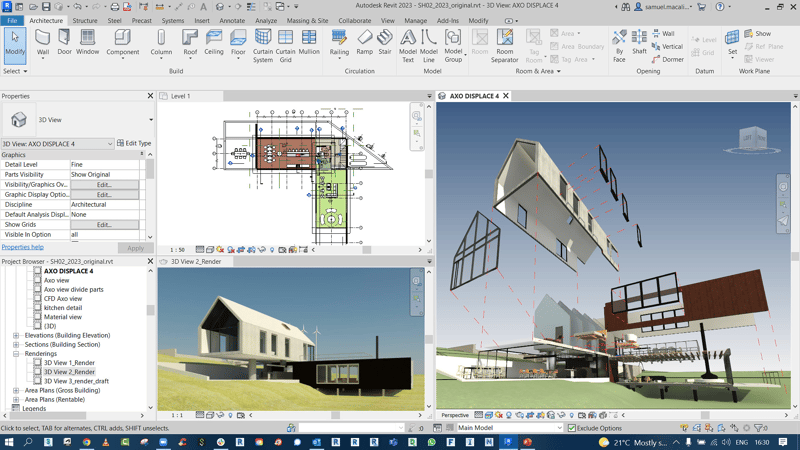
Image: Autodesk - Revit
Digital is no longer optional
The AIA client survey shows that clients increasingly value architects who bring strong digital capabilities, especially BIM, to support collaboration with trades and contractors.
Recent BIM adoption studies in Australia indicate that:
- A large majority of architecture practices now use BIM on many or most projects.
- Most expect BIM to be the dominant method of delivering projects within the next few years.
What architects expect from brand reps
Conversations about samples and brochures are still important. But the quiet deal breaker is often digital.
Architects are looking for reps who can provide:
- Well built Revit or Archicad objects that are light, accurate and easy to schedule.
- 2D details, DWGs and IFC files that coordinate with common platforms.
- Product data that is structured – U values, R values, acoustic ratings, fire performance – in formats that feed into schedules, energy models and digital twins.
- Clear instructions on how to maintain those digital assets over time so they do not go out of date.
If your product is not in their model, it is much harder for it to stay in the job.
5. Respect their time and wellbeing

Photo: Australian Institute of Architects - WELLBEING FOR ARCHITECTS
Why it matters so much now
The Wellbeing of Architects research shows two thirds of architects report at least some psychological distress, with more than a quarter experiencing moderate to severe distress.
-
42 percent say their work has a generally negative impact on their wellbeing.
-
Younger architects are especially at risk. (RMIT University)
-
Drivers include long hours, high complexity, tight fees and a sense that “the juice is not worth the squeeze”.
How brand reps can respond
Reps who support wellbeing:
-
Keep meetings short, purposeful and prepared – with current information ready to go.
-
Offer clear follow up actions so architects are not chasing missing data at midnight.
-
Use email and shared folders for documentation instead of “I’ll send it later” promises.
-
Are comfortable with “no” – they understand not every practice has capacity right now.
-
Check in on how the project and team are going, not just the next sale.
A rep who consistently makes life simpler earns long term trust – and more invitations back.
6. Act like a long term partner, not a one-off salesperson

What clients already seek from architects
The AIA client research is very clear:
67 percent of clients want a collaborative relationship where architects and clients both take initiative and lead in different areas.
Clients value architects who communicate well, anticipate problems, manage budget, program and risk, and bring new ideas.
Architects, in turn, look for the same behaviour from their suppliers.
What this means for brand reps
Architects look for reps who:
-
Are available early, during design, when key decisions are still flexible.
-
Stand by them when value management hits and help find smart alternatives that keep performance and compliance intact.
-
Support post occupancy questions or defects fairly and quickly.
-
Share lessons learned from other projects – what went wrong, how it was fixed, and what they would do differently next time.
Long term partnership also means staying in the relationship when a product is not selected on one job. The next project may be a better fit.
7. Help architects educate their own clients

The hidden job: client education
The Institute’s client survey shows clients need convincing on three things before investing in sustainability or higher quality design:
-
Affordability and payback
-
Operational efficiency once built
-
Reputation and brand benefits
Architects often carry this education load alone.
Where reps can help
This is where brand reps can add serious value by providing:
-
Short, visual case studies showing cost, performance and outcomes in plain language.
-
Before / after comparisons – baseline code minimum vs upgraded solution.
-
Talking points for client meetings – one page summaries focused on risk, value, payback and comfort.
-
Evidence architects can reuse – energy bills, maintenance savings, occupant feedback, star ratings.
The more a rep helps an architect win their internal client conversations, the more likely their product stays in the design.
Putting it into practice – a quick checklist for brand reps

When you next plan outreach to Australian architects, start here:
☐ Do your homework - Know the firm’s sector focus, recent projects and current pressures.
☐ Lead with the answer - “Here is how we can help you reduce risk on X type of project” rather than a generic product pitch.
☐ Bring three things to every meeting Updated pricing and lead times. Clean compliance documentation. At least one relevant sustainability or performance story.
☐ Make it easy to say yes - Provide BIM objects, spec text and details ready to drop into their documentation.
☐ Follow through - Send everything you promised, quickly and in a clearly labelled folder.
☐ Stay human - Recognise the stress load architects are under. Be kind, concise and reliable. Architects in 2026 are still hungry for new products, better performance and genuine collaboration. They just need brand reps who understand the pressures they are facing – and who turn up ready to help carry the load.
Architects in 2026 are still hungry for new products, better performance and genuine collaboration. They just need brand reps who understand the pressures they are facing – and who turn up ready to help carry the load.
By Nancy Attoh (Head of Growth), with contributions from Yasmin Munro (Relationship Manager)