

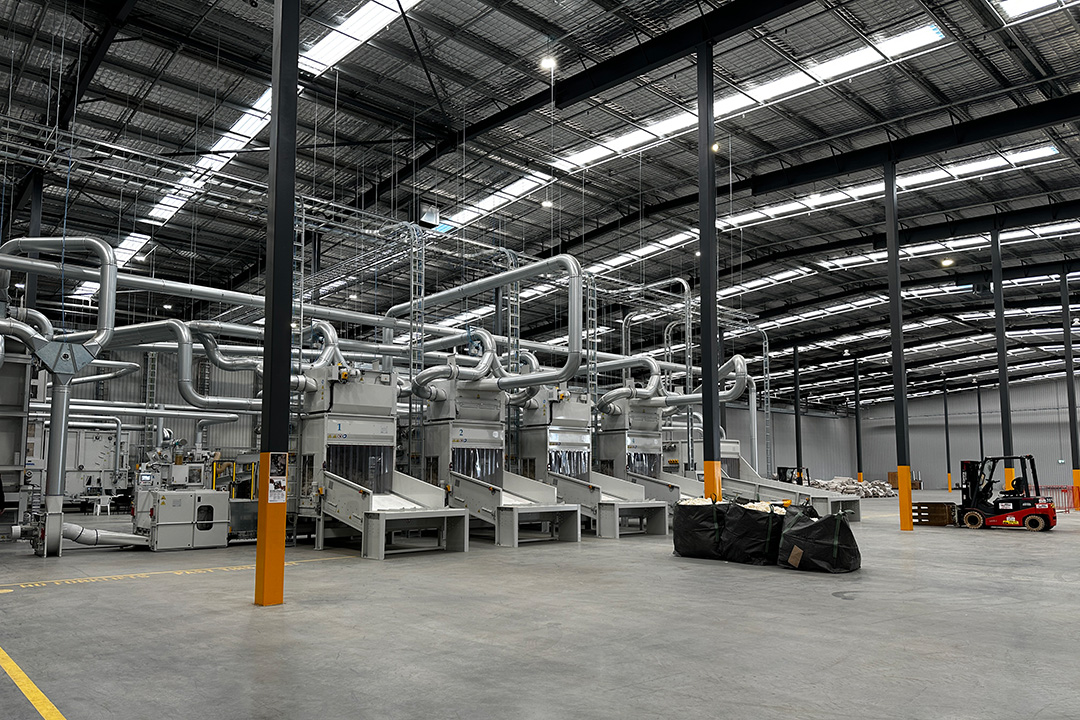
TL;DR: The Arc Agency's Melbourne team recently toured the Planet Protector Group (PPG) facility. This state-of-the-art plant is closing the loop by converting 150 tonnes of landfill-bound textiles into high-performance insulation for the Australian built environment.
When our Melbourne team stepped onto the floor of the Planet Protector Group (PPG) manufacturing plant in Altona North, they weren't just visiting a factory—they were witnessing a seismic shift in Australian manufacturing. As the most advanced fibre-processing facility in the Southern Hemisphere, PPG is proving that the "circular economy" isn't a theory; it’s a high-tech reality.
Why the Planet Protector Visit Matters for Architects & Designers
In the modern design landscape, the "Green" label is no longer enough. Architects and Designers are now looking for holistic sustainability. The Melbourne plant visit highlighted three critical pillars for the specification community:
The End of "Itchy" Insulation (Wellness & IAQ)
Historically, thermal insulation was a "hidden" product that installers hated and occupants ignored.
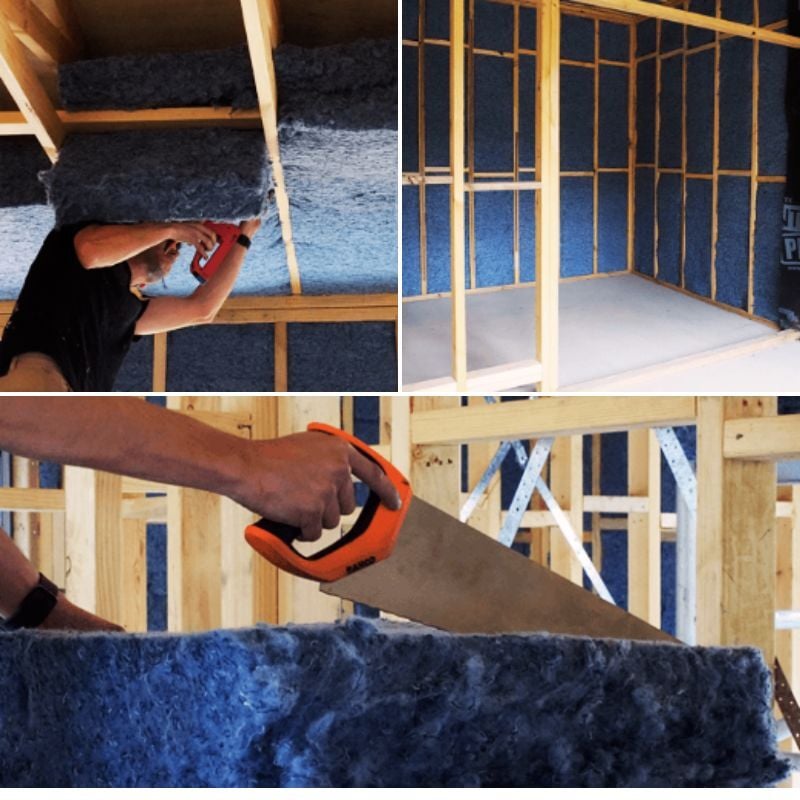
The A&D Shift: PPG’s Jeanius™ and wool products are VOC-free and non-toxic. For projects targeting WELL Building Standard or high Indoor Air Quality (IAQ), this is a game-changer.
Design Freedom: It allows for "exposed" acoustic treatments in creative ways without the risk of airborne glass fibres or off-gassing.
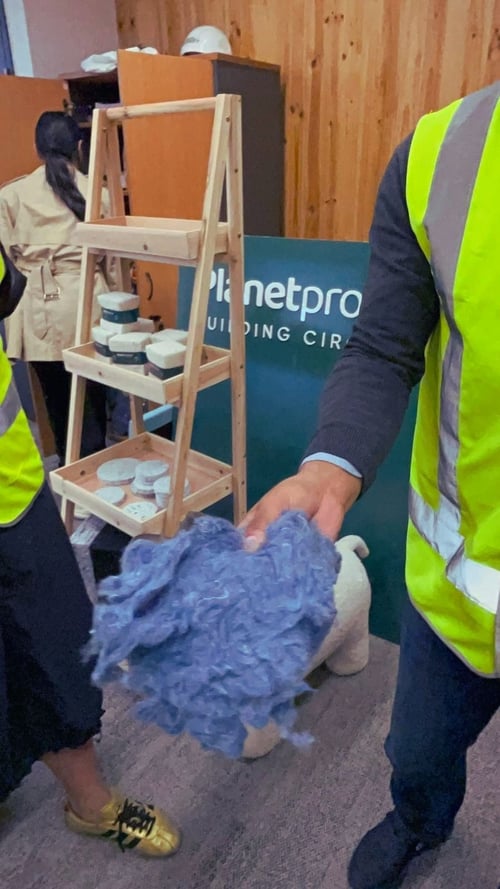
"Seeing the raw, shredded denim transformed into structural insulation batts was a reminder that the solutions to our climate challenges aren't just theoretical—they are being manufactured right here in Melbourne." — Insights from the Melbourne Site Visit
Photo: Site Planet Protector Site Visit (March 2026) with Lars Ljung - Sustainability Manager at Planet Protector Packaging
Frequently Asked Questions
What is closed-loop manufacturing in the building industry? It is a process where waste (like denim or wool) is reclaimed and processed back into new materials. Planet Protector Group utilizes a zero-waste line in Melbourne to turn textile waste into high-performance insulation batts.
Is denim insulation as effective as traditional glass-wool? Yes. Denim insulation like Jeanius™ offers equivalent or superior thermal R-values while providing better acoustic performance. It is also safer to handle, as it does not contain the glass fibres that cause skin and lung irritation.
Does natural fibre insulation meet Australian Fire Standards? Yes. Planet Protector Group products, including the Jeanius™ range, are treated to meet strict Australian building standards for fire retardancy, ensuring safety is never compromised for sustainability.
How does Jeanius™ insulation contribute to Green Star ratings? By utilizing post-consumer recycled content (denim) and locally sourced natural fibres (wool), PPG products can contribute points toward Responsible Building Materials, Life Cycle Costing, and Indoor Air Quality credits within the Green Star framework.
Can wool or denim insulation be used for acoustic attenuation? Absolutely. Natural fibres have high-density cellular structures that provide exceptional sound absorption. This makes them ideal for internal partitions in high-end residential or commercial office fit-outs where acoustic privacy is paramount.
Where is Planet Protector Group insulation manufactured? All PPG fibre products are manufactured at their state-of-the-art facility in Altona North, Victoria. This local production supports the Australian economy and significantly reduces transport-related carbon emissions.
A huge thank you to Sustainability Manager Lars Ljung for welcoming us and guiding our team through your incredible facility. The insights shared during the tour were invaluable!
Find out more at Planet Protector Group
/Planet%20Protection%20LOGO%20PP%20Building%20Circularity.png?width=281&height=63&name=Planet%20Protection%20LOGO%20PP%20Building%20Circularity.png)