Breeze blocks, dark timber, rattan and bold wallpaper: four trends from the 1970s and what they've become in Australian design in 2026.
1. From breeze blocks to contemporary screening
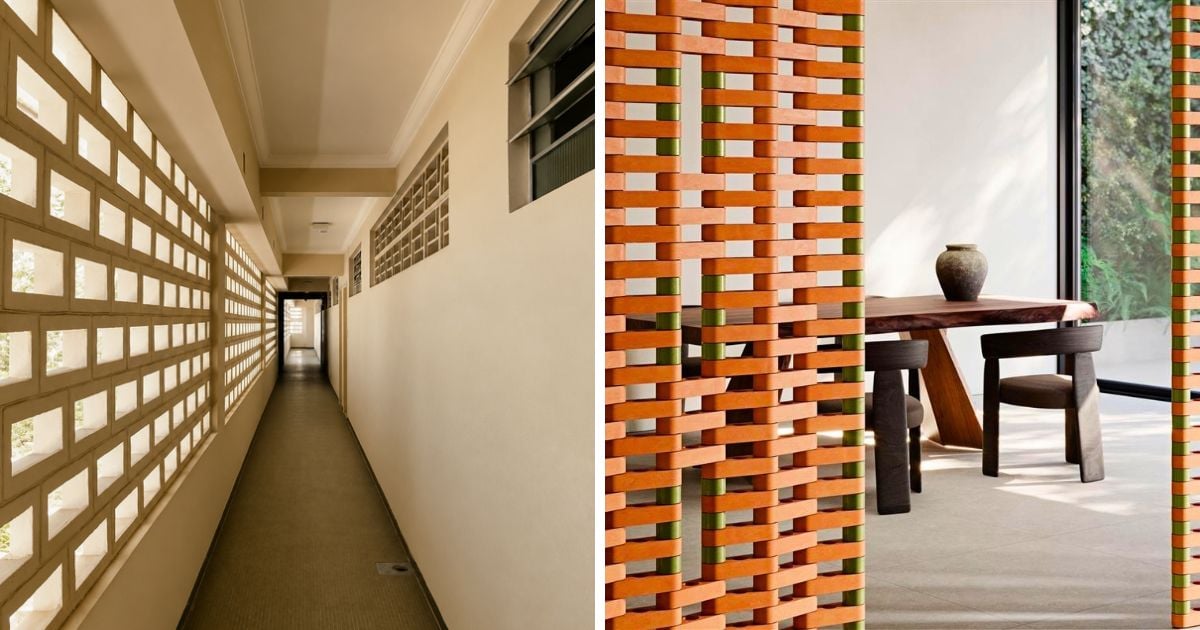 Image: Left: 1970s breeze block corridor. Right: ROBERTA by Riva Ceramica courtyard screening. Credit: @oranduu Pexels and Riva Ceramica supplied.
Breeze blocks were a familiar sight across 1970s Australian homes, appearing in front fences, patios and balconies. Their distinctive geometric patterns made them a feature in their own right, while their open design offered privacy without completely closing off outdoor spaces. They were a natural fit for the era's love of outdoor living.
Today, screening has evolved from a practical boundary into an intentional part of a building's architectural expression. Screens can frame views, filter light and cast shifting patterns of shadow, shaping how a building connects with its surroundings. Rather than simply dividing spaces, they can become a defining element of the design.
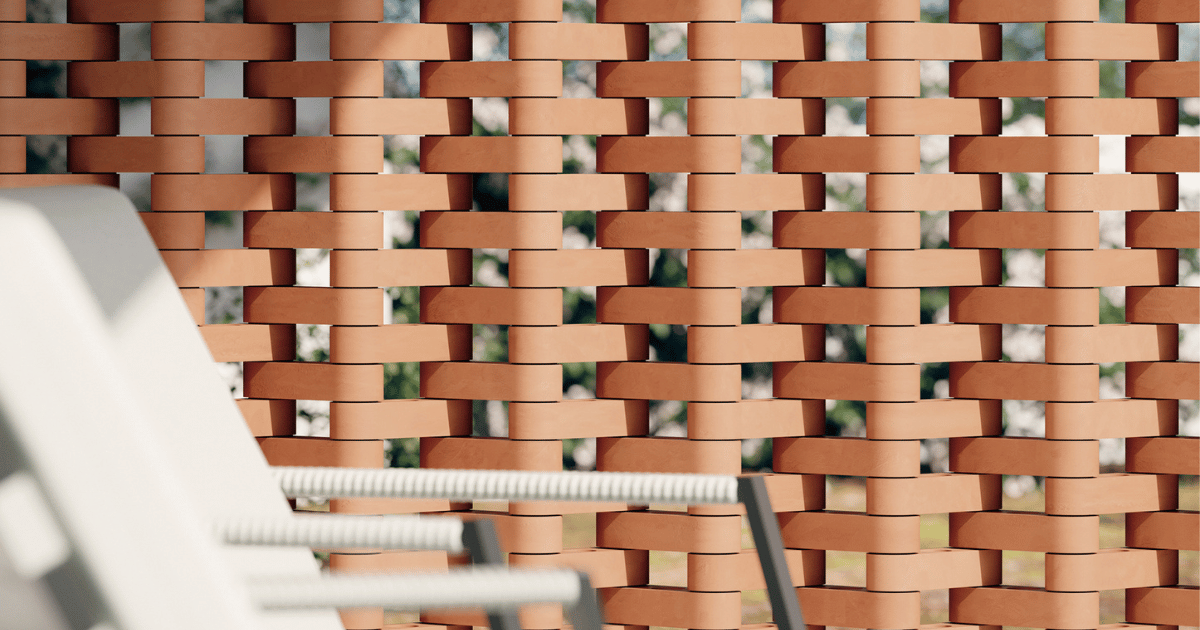
ROBERTA by Riva Ceramica brings this enduring feature into contemporary architecture. Supplied by Melbourne-based Riva Ceramica and designed by Inma Bermúdez, it is an extruded, handmade terracotta piece made for screening indoors and out. Its geometric pattern introduces character and visual detail while drawing on a familiar element of Australian residential design.
The breeze block grew up. Are we reinventing the breeze block, or simply rediscovering what made it work in the first place?
2. From dark timber panelling to refined timber finishes
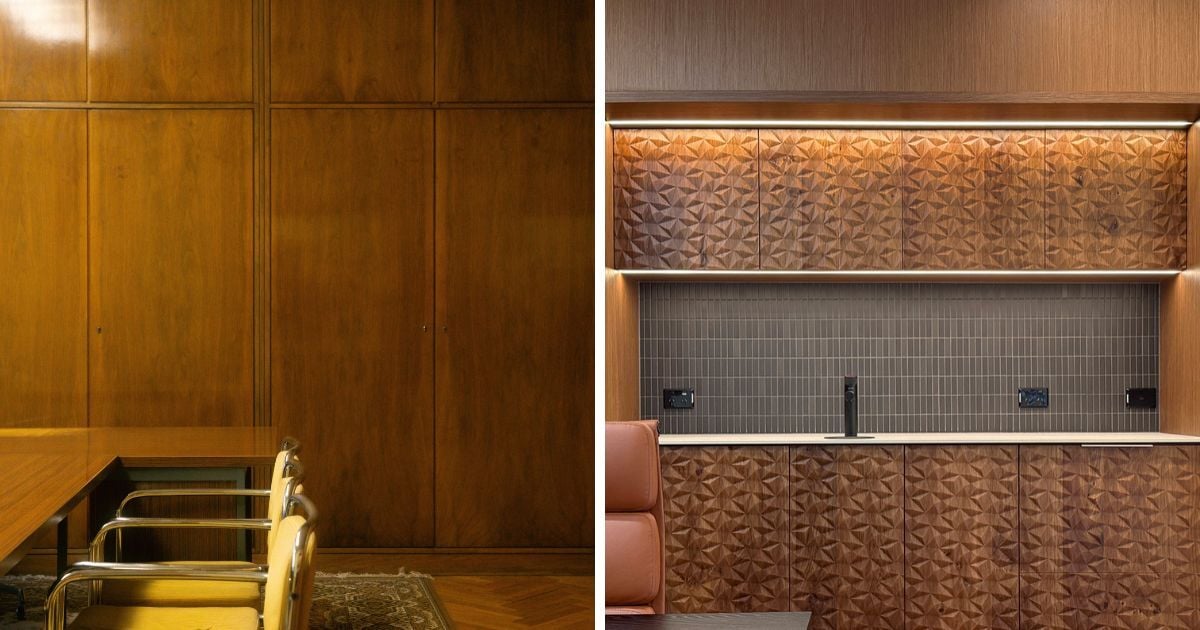
Image: Left: 1970s timber-panelled interior. Right: Euro Creative by Verve Veneer bedroom feature wall. Credit: @van-anh-nguyen Pexels and Verve Veneer supplied.
The 1970s didn't just like timber. They committed to it. Dark timber panelling stretched across walls, ceilings and cabinetry, creating interiors that felt warm, grounded and full of character. Paired with earthy colour palettes and heavy furnishings, it could make a room feel cosy, but sometimes enclosed.
Today, timber is still valued for its natural character, but the approach is often more deliberate. Rather than covering every surface, designers use it to create contrast, highlight architectural details and bring depth to cleaner, more minimal spaces. Variations in tone, grain and finish allow timber to take on a different role in each setting.
Euro Creative by Verve Veneer takes timber beyond a flat surface. The range of European timber veneer panels is embossed under very high pressure to create a permanent, three-dimensional pattern, while keeping the grain and natural character of real timber in focus. The finish itself becomes part of the architectural expression.
Timber never left. We just learnt that an entire room doesn't need to look like a sauna.
How much timber is too much? Has contemporary design finally found the right balance between warmth and restraint?
03. From rattan & cane to contemporary bamboo
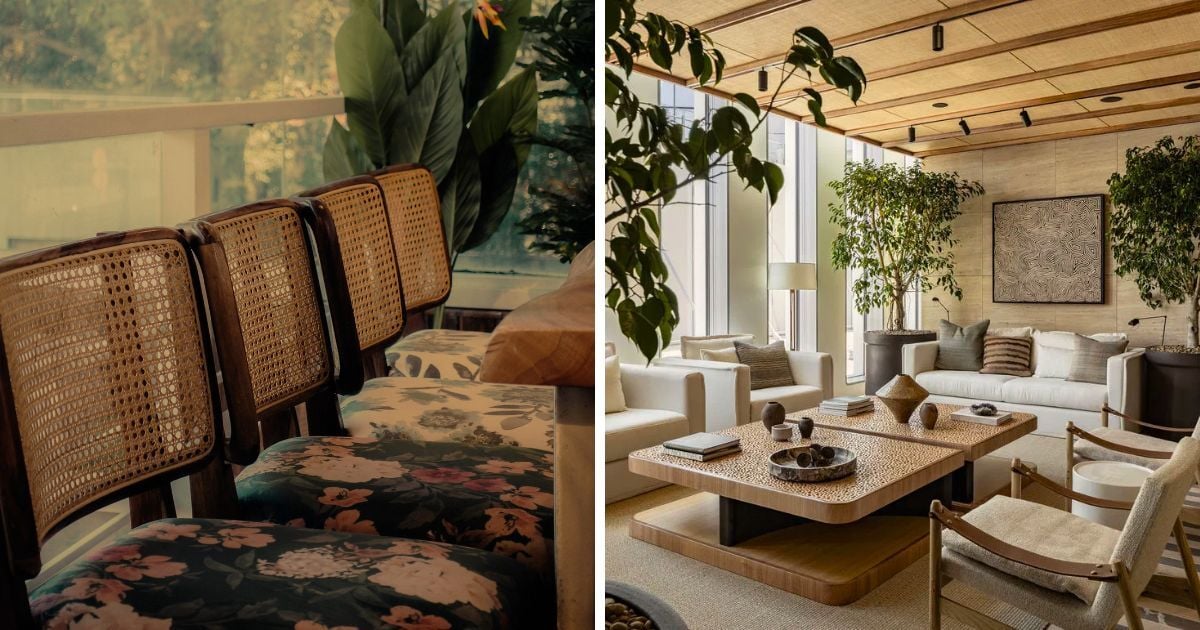
Image: Left: 1970s cane-back dining chairs. Right: woven wall linings in a contemporary lounge, House of Bamboo Crafted Series. Credit: credit @pramodtiwari Pexels and Felix Mooneeram for House of Bamboo.
Natural textures were a defining feature of interior design during the seventies. Rattan chairs, cane furniture and woven screens brought an unmistakable sense of the outdoors inside, adding warmth and texture to homes, restaurants and living spaces. Often paired with dark timber and earthy colours, these materials created relaxed, tactile interiors that felt connected to nature.
Today, natural materials remain popular, but they're being used in ways that go beyond the furniture and decorative details of the 1970s. Bamboo offers another way to bring natural texture into contemporary architecture, with its distinctive grain and woven finishes lending themselves to everything from feature walls to privacy screening. It can introduce pattern and visual interest without relying on bold colours or elaborate detailing, allowing the material itself to become part of the design.
House of Bamboo's Crafted Series brings rattan, woven bamboo and reed into contemporary architectural applications. It is a fitting link to the decade: the company says it has supplied handwoven rattan cane webbing for more than 50 years. Varied patterns and woven finishes introduce rhythm, depth and visual interest, turning wall linings and privacy screening into features that contribute to the overall design.
Natural textures never really went out of style. We just found new ways to use them. Are natural materials the finishing touch, or the starting point for your design?
04. From Floral wallpaper to custom wallcoverings
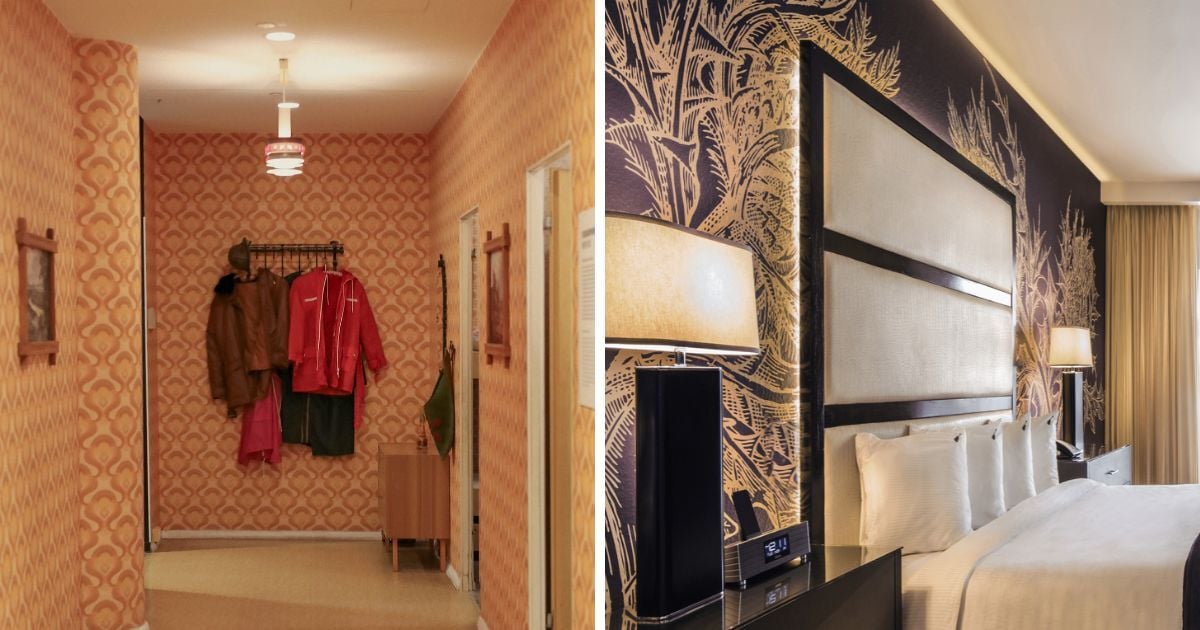 Image: Left: 1970s patterned wallpaper hallway. Right: DreamScape botanical custom wallcovering. Credit: @jiajia Pexels and DreamScape® Special Effects
In the 1970s, wallpaper wasn't designed to blend into the background. Oversized florals, psychedelic patterns and bold geometric prints brought colour and personality to interiors, often covering entire rooms in repeating designs.
Fast-forward 50 years, and wallcoverings have evolved far beyond repeating patterns. Custom imagery, large-scale graphics and tactile finishes allow designers to create focal points, establish a mood or reinforce the identity of a space. In hospitality and commercial interiors, a wall can become an opportunity to express a brand, create a sense of place or give an otherwise understated space a defining feature.
DreamScape, available in Australia exclusively through Ricky Richards, brings this approach into both commercial and residential interiors by letting designers print custom imagery onto the wallcovering itself. That opens up possibilities beyond a catalogue pattern, from oversized artwork to imagery that reflects a venue's location, purpose or brand. At W Sydney in Darling Harbour, Bowler James Brindley's interior concept used digitally printed DreamScape wallcoverings in the hotel's corridors, in bold colours drawn from Australian flora.
Wallpaper used to cover the room. Today, it can define it. Where could you make the walls the main event in your next project?