Suppliers Who Aren't in the Room Will Miss It.
Soheil Abedian built Q1, once the tallest residential tower in the world, on the Gold Coast in 2005. Two decades later, the developer behind that landmark is watching the skyline he helped define get rewritten again, this time by a project nearly 400 metres tall, almost 100 storeys taller than anything the city has built before.
Asked whether the Gold Coast was entering a new supertower era, his answer left no room for doubt: this is a shift the industry cannot stop. He believes the green light for the Southport project has put the city on the cusp of a new supertower era.
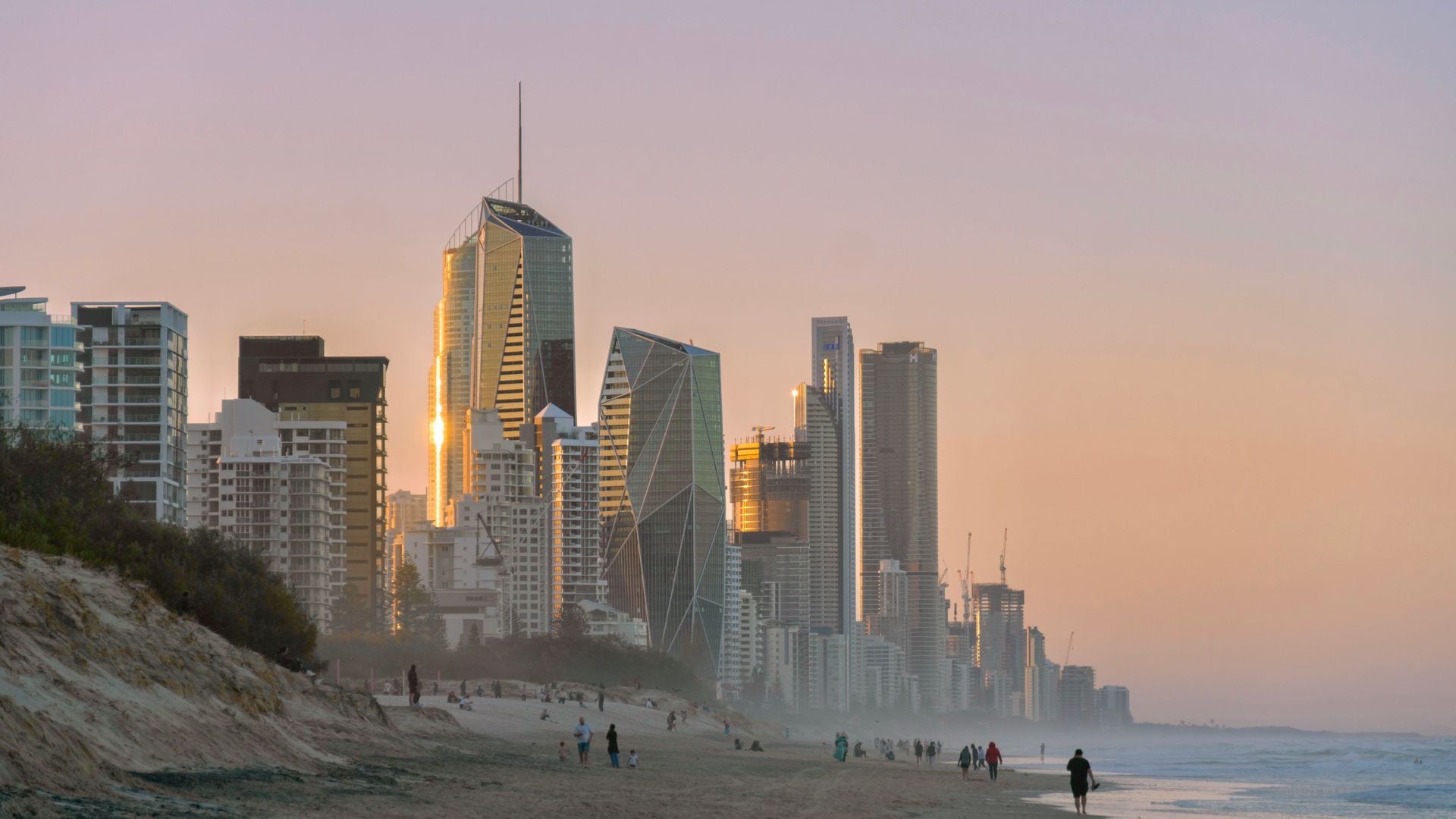
He's not wrong. Southport's approved One Park Lane development, a $700 million, 101-storey residential tower paired with a 60-storey commercial companion, is only one entry on a Gold Coast construction list that reads like a masterplan for an entirely new city. And the story underneath the skyline is even more important for anyone selling into it.
A City Building Faster Than It Can Supply Itself
Here's the number that should get every supplier's attention: the Gold Coast now needs around 9,250 new homes a year to keep pace with population growth. In the last financial year, only 4,091 were approved — a shortfall of more than half. That gap isn't closing. It's part of why the Property Council of Australia has flagged that a majority of already-approved Gold Coast projects are at risk of delay or cancellation.
At the same time, the city has become the engine room of the state's construction cost pressure. Rider Levett Bucknall's most recent national construction market update names Brisbane and the Gold Coast among the most constrained markets in the country, forecasting Gold Coast construction costs to climb 5.5% in 2026, among the steepest rises nationally. RLB's Oceania research director put it plainly: the volume of work already underway is what's driving that pressure, and it's a trend he expects to continue in 2026, underpinned by record work done and a robust pipeline.
That's the tension every supplier needs to understand about this market. Demand for building products on the Gold Coast isn't just high, it's structurally outpacing supply. And when supply is tight, the suppliers already trusted by the specifiers writing the documents are the ones who get written in. The suppliers still trying to get a meeting are the ones who get left off the list.
 Photo: Gold Coast shoreline under construction. Credit @Tizzy Pexels.com
The Numbers Behind the Boom
The scale of what's happening on the Gold Coast right now is no longer a regional story, it's a national one.
Fastest-growing economy in Australia. The Gold Coast's Gross Regional Product has hit $49.4 billion, and independent forecasting puts the region's growth at 10.07% over the next four years, ahead of Brisbane, ahead of Queensland, and well ahead of the 7.91% national average.
A $91 billion project pipeline. Roughly $54 billion of that is government and council investment, with a further $37 billion coming from the private sector, spanning transport, health, tourism, and residential development.
420 new residents every single week. Population growth is now pushing the Gold Coast toward one million residents by 2040, six years earlier than previous forecasts predicted.
Construction has overtaken tourism. As of early 2026, construction ($5.04 billion) and health care ($4.5 billion) have displaced tourism as the city's leading economic drivers for the first time, a sign the Gold Coast's economy is maturing well beyond its beach-and-theme-park reputation.
COAST Buyer's Agency principal Joe Pullos, whose firm co-authored the 2026 Gold Coast Property Report, described the shift as a structural shift in where Australians want to live and work, not a speculative run.
What's Actually Being Built
The headline figures are backed by projects that are already reshaping how the city is specified and built.
The supertower era. One Park Lane's approved twin towers, one of them set to become the Southern Hemisphere's tallest residential building, will deliver luxury apartments, a 12,700 sqm office component, and a fully glazed 22nd-floor skybridge. It's one of more than a dozen major residential towers currently approved or under construction across Southport, Broadbeach, Surfers Paradise, and Burleigh Heads. Hutchinson Builders chairman Scott Hutchinson, whose firm has delivered dozens of Gold Coast high-rise projects, has a blunt read on where the market goes from here: conditions are manageable for now, but as the Olympic pipeline ramps up, he expects the market to explode in 2027 to 2028.
Build-to-Rent at scale. A four-tower, almost-900-apartment build-to-rent development has been lodged for the Gold Coast Health and Knowledge Precinct at Southport, next to Gold Coast University Hospital and Griffith University, purpose-built for health workers, students, and key workers. It's part of a broader BTR corridor stretching to Robina, where six approved medium-rise towers, including a $225 million four-tower development, are already adding more than 700 rental homes.
The Olympic effect, arriving early. The Gold Coast is a confirmed co-host city for Brisbane 2032, with upgrades to the Gold Coast Convention Centre, a new Gold Coast Arena, an athlete village at Royal Pines, and marathon swimming and triathlon events staged at the Broadwater Parklands. Faster rail between Brisbane and the Gold Coast, and future stages of the Coomera Connector, are locked into the same delivery plan. Premier David Crisafulli has called the Games a once-in-a-generation opportunity for Queensland, and for the Gold Coast specifically, that opportunity starts landing in the ground years before the opening ceremony.
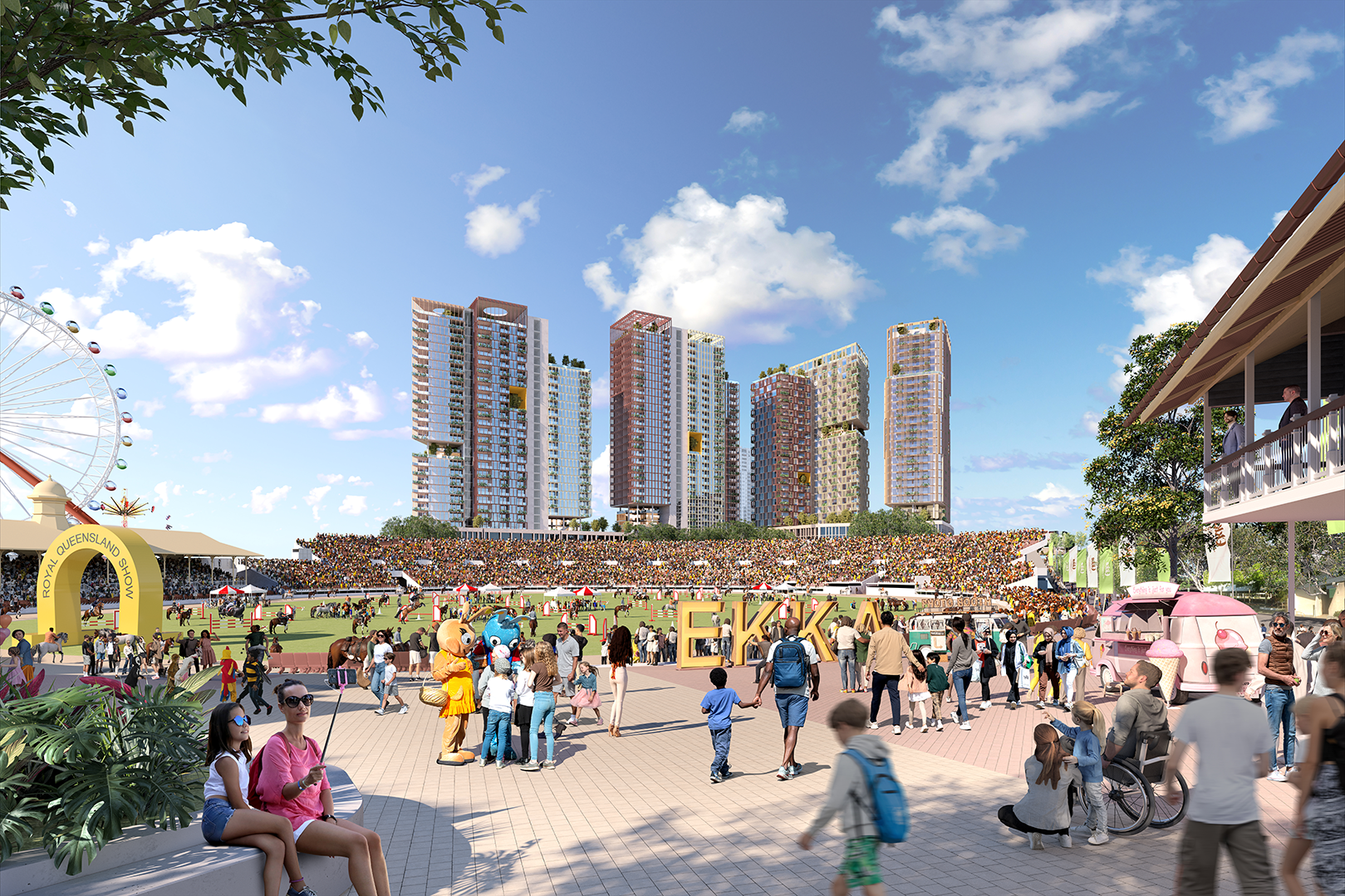 Image: Main Arena Legacy render, Brisbane Showgrounds. © State of Queensland 2026. Licensed under CC BY 4.0.
Why This Is a Supplier Problem, Not Just a Headline
Every one of those projects, the supertowers, the BTR precincts, the Olympic venues, needs a product specified into it. And the architects and developers making those decisions are working through a market defined by two pressures at once: too much demand, and not enough time.
That's exactly the environment where relationships decided months in advance matter most. A specifier under pressure to deliver a project on a tightening timeline doesn't go looking for a new supplier when the tender's already open, they go back to the ones already in their contact list, the ones who showed up, had the technical answers ready, and made the conversation easy. By the time the Olympic-driven surge Hutchinson is describing actually arrives in 2027-28, the suppliers with a seat at the table will already be decided.
That's the case for showing up now, not later.
Meet Gold Coast's Specifiers Face-to-Face: The-Arc, Gold Coast
The Arc Agency brings building product suppliers face-to-face with the architects and designers behind the Gold Coast's biggest projects, on 3 September 2026 at The Star, Gold Coast. Category exclusivity means a maximum of two suppliers per product category, so once a category is booked, it's gone for the round.
It's the same format that's already producing results for suppliers across the country. As one Radically Human exhibitor put it, the evening delivered more quality conversations in two hours than months of chasing meetings, a big part of why more than 85% of The-Arc's exhibitors rebook year on year.
Only a few stands remain for Gold Coast in September.

Frequently asked questions
Why should suppliers exhibit on the Gold Coast now, before the Olympic pipeline peaks? +
Specifiers under pressure to deliver a project on a tightening timeline go back to the suppliers already in their contact list rather than searching for new ones. Industry leaders expect the Gold Coast market to intensify sharply in 2027-28 as the Olympic pipeline ramps up, which means the relationships that decide who gets specified are being formed right now, well ahead of the surge.
How big is the Gold Coast's construction pipeline? +
The Gold Coast has a $91 billion project pipeline, around $54 billion in government and council investment and $37 billion from the private sector, spanning transport, health, tourism, and residential development. It's now Australia's fastest-growing regional economy, with Gross Regional Product forecast to grow 10.07% over the next four years, well ahead of the national average.
What major projects are driving demand for building products on the Gold Coast? +
Three concurrent waves of development are reshaping how the city is specified and built: a new supertower era led by the approved 101-storey One Park Lane development, a Build-to-Rent boom including an almost 900-apartment precinct at the Gold Coast Health and Knowledge Precinct, and confirmed 2032 Olympic infrastructure spanning a new Gold Coast Arena, an upgraded Convention Centre, and an athlete village at Royal Pines.
When and where is the Gold Coast event, and how many stands are left? +
Radically Human Gold Coast runs on 3 September 2026 at The Star, Gold Coast, bringing building product suppliers face-to-face with the architects and designers behind the city's biggest projects. Category exclusivity limits each product category to a maximum of two suppliers, and only a few stands remain for the Gold Coast round.
Last updated: 14 July 2026