

There's a particular kind of pressure that comes with growing up in an architect's house. Other kids inherit a stamp collection or a bad temper. These six inherited a drafting table, a reputation, and in one case, the same actual name. Here's how six architect fathers and their architect children stack up, project for project.
The Murcutts
Dad built: Glenn Murcutt spent decades as a sole practitioner, no staff, phone pulled out of the wall when he needed to think. That solitary approach won him the Pritzker Prize in 2002 and a body of work, like the Marika-Alderton House and the Arthur and Yvonne Boyd Education Centre, that's still taught in architecture schools as the gold standard for building with the land rather than against it.
He built: Son Nick Murcutt took a different path entirely, working collaboratively where his father worked alone. He co-founded Neeson Murcutt Neille with partner Rachel Neeson and delivered the much-loved Prince Alfred Park Pool, picking up the Sir John Sulman Medal and a Robin Boyd Award along the way. Same philosophy, completely different working style. Nick passed away in 2011, but the awards kept coming for the firm after his death, a sign the foundations he laid were solid.
The verdict: Dad went it alone. Son went in with a partner. Both ended up with buildings people genuinely love using.
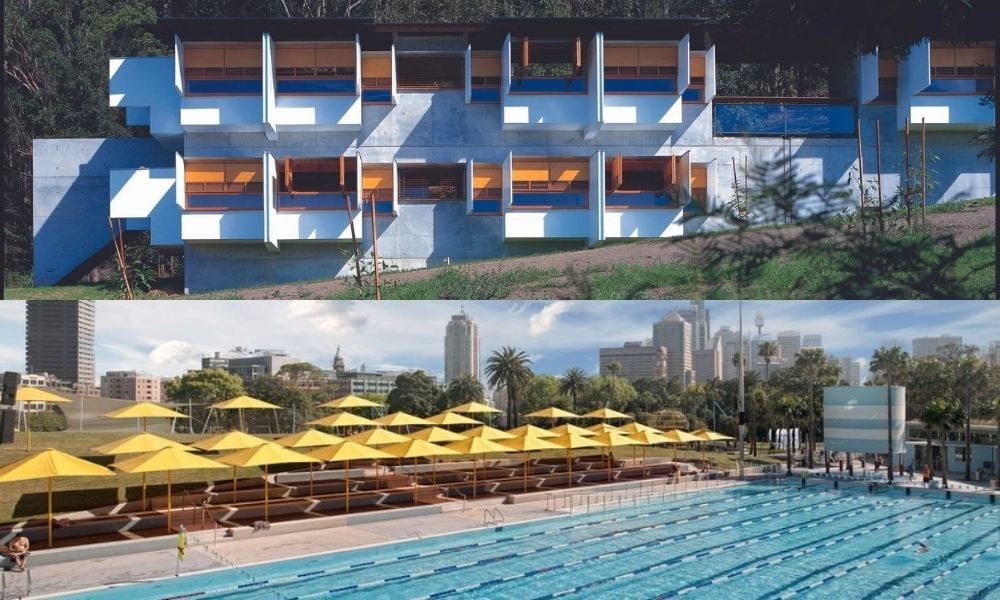
Top: Arthur and Yvonne Boyd Education Centre, Glenn Murcutt. Photography: Anthony Browell
Bottom: Prince Alfred Park Pool, NEESON MURCUTT NEILLE
The Hennessys
Dad built: John Francis Hennessy arrived in Sydney in 1880 and built a career almost entirely around the Catholic Church, working on the Sydney Town Hall Centennial Hall extension and later Cathedral of St Mary and St Joseph in Armidale. His works included a number of colleges around Sydney, including St. Joseph's (Joey's) College in Hunters Hill, including . Solid, respected, distinctly local.
He built: Son Jack joined the firm in 1912 (also named John Francis Hennessy, because apparently one legendary architect per family wasn't confusing enough) and, once his father retired, took the practice international. Jack delivered Art Deco office towers across Australia, New Zealand and South Africa, plus the Great Court at the University of Queensland, earning him the tag "Australia's first international architect."
The verdict: Dad built the local reputation. Son took the family name, and the family firm, global.
.jpg?width=600&height=360&name=The%20Hennesseys%20(1).jpg)
Left: St Joseph's College, Hunters Hill, John Francis Hennessy
Right: Great Court at University of Queensland, Hennessy, Hennessy & Co
The Saarinens
Dad built: Eliel Saarinen was already a major name in Finnish architecture before the family relocated to the United States, where he helped turn Cranbrook Academy of Art into one of the great design schools of the 20th century. Eliel's most famous built work is the Helsinki Central railway station (Helsingin päärautatieasema) in Finland, designed in 1904 and completed in 1919.
He built: Son Eero grew up literally inside a design institution and went on to create two of the most photographed structures on the planet: the Gateway Arch in St Louis and the swooping, spaceship-like TWA Flight Center at JFK. He died at just 51, but not before proving a famous surname could launch a career rather than limit one.
The verdict: Dad built the school. Son built the icons everyone recognises, even people who couldn't name a single other architect.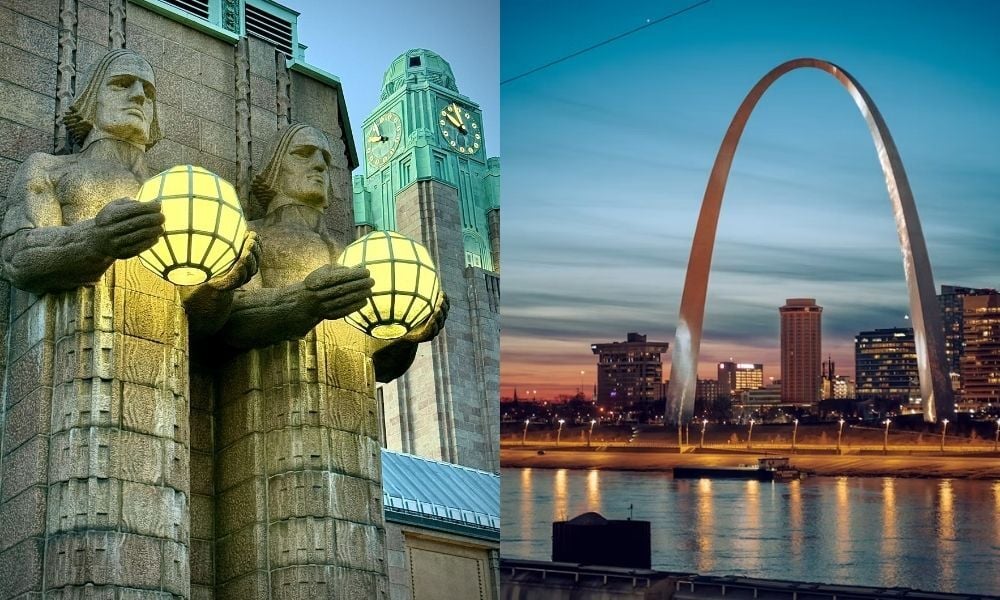
Left: St Joseph's College, Hunters Hill
Right: Great Court at University of Queensland, Hennessy, Hennessy & Co
The Rogers
Dad built: Richard Rogers co-designed the Pompidou Centre in Paris, the building that turned "inside-out architecture" (all the pipes and ducts on the outside) into a global sensation, and picked up the Pritzker Prize for a career full of similarly bold, high-tech buildings.
He built: Son Ab runs his own design and architecture studio in London and, in 2025, four years after his father's death, curated and designed "Richard Rogers: Talking Buildings" at Sir John Soane's Museum, a retrospective walking visitors through eight pivotal projects from his father's career.
The verdict: Dad built the buildings. Son is now building how the world remembers them, arguably just as important a job.
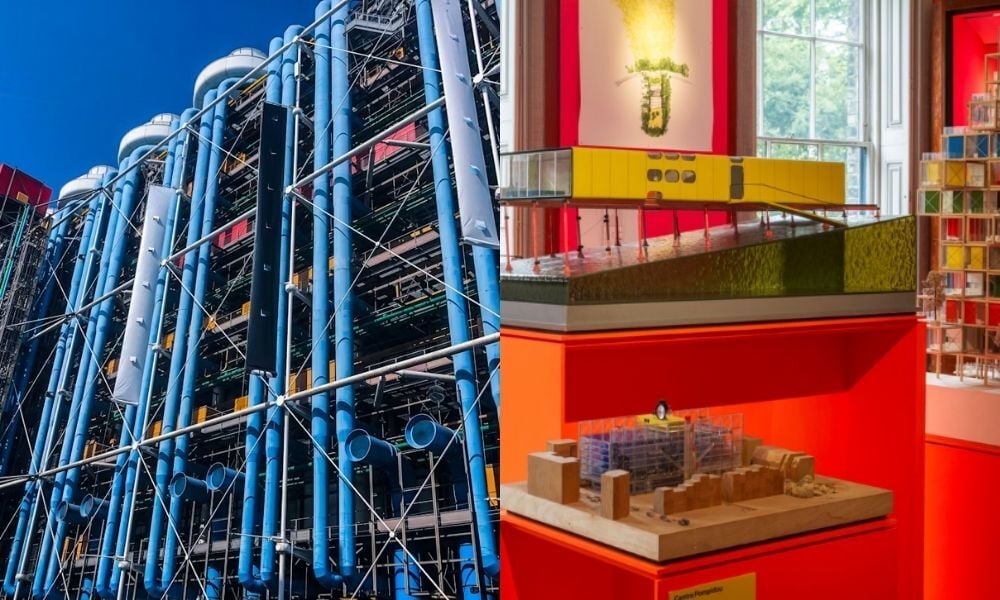
Left: Exterior Centre Pompidou building, Paris Richard Rogers
Right: Richard Rogers: Talking Buildings exhibition, Sir John Soane's Museum Curated by Ab Rogers
The Hijjases
Dad built: Hijjas Kasturi is considered the father of modern Malaysian architecture, responsible for landmark towers like Menara Maybank and Menara Telekom, and even trained in Australia along the way. He's been compared to Harry Seidler for the way his buildings meet the street.
She built: Daughter Serina studied at London's Bartlett School of Architecture, cut her teeth at Foster + Partners, then returned home to take over as director of Hijjas Architects & Planners, steering the firm toward sustainable design (their Malaysia Pavilion for Expo 2020 Dubai was recognised as one of the event's leading sustainable buildings). She still calls her father "the boss," and credits him with the ethical standards the whole firm runs on.
The verdict: Dad built the skyline. Daughter is now building the firm's next fifty years, one green roof at a time.
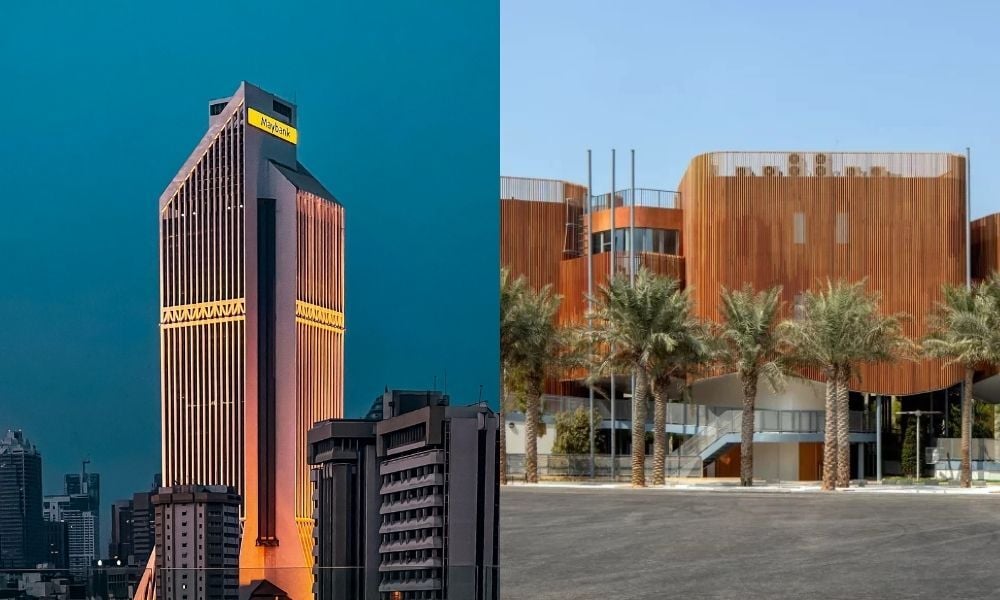
Left: Menara Maybank, Hijjas Kasturi
Right: Malaysia Pavilion Expo 2020, Serina Hijjas
The Wrights
Dad built: Frank Lloyd Wright is about as famous as architects get, full stop. Fallingwater, the Guggenheim, an entire philosophy of "organic architecture" that reshaped how America thought about houses.
He built: Eldest son Frank Lloyd Wright Jr wisely rebranded himself "Lloyd Wright" and carved out his own Los Angeles career, designing the Wayfarers Chapel and the Hollywood Bowl's second and third band shells. The relationship wasn't always easy (there was a real falling-out over the Imperial Hotel in Tokyo), but Lloyd's work stands entirely on its own. His son Eric Lloyd Wright kept the family business going for a third generation, working right up until his death in 2023.
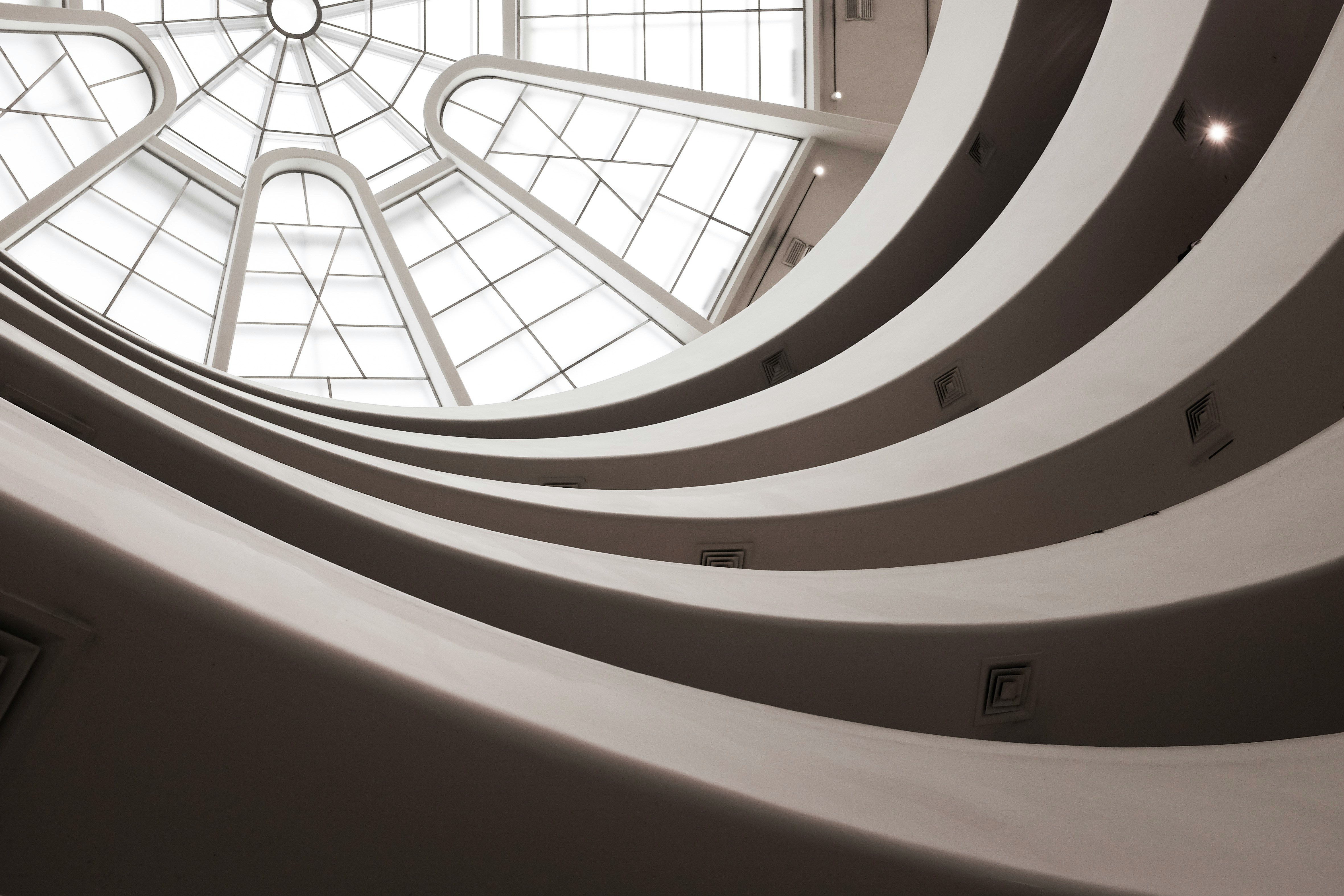
The verdict: Dad was the legend everyone studies. Son built quietly brilliant work in his shadow, and grandson made sure the lights stayed on after that.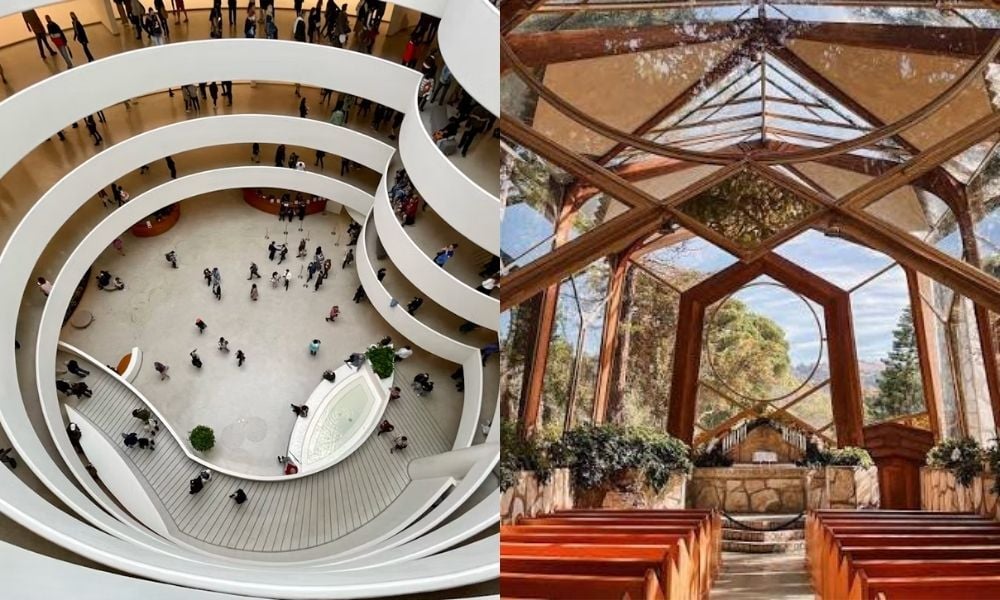 Left: Guggenheim, interior, Frank Lloyd Wright
Right: Wayfarer Chapel interior, Frank Lloyd Wright Jr