

NCC 2025 has landed. The preview dropped in February 2026, the final code was published on 1 May 2026, and states and territories can now adopt it under their own building laws.
First, the timeline (because it is messier than the headline)
NCC 2025 is not a single national switch-on date. Publication and adoption are two different things, and every jurisdiction moves at its own pace.
-
Published: 1 May 2026, following the February preview release
-
Victoria and Tasmania: In effect from 1 May 2026 (Tasmania with state variations that disapply some changes)
-
ACT and WA: Commenced 1 May 2026 with a 12 month transition; mandatory from 1 May 2027
-
NSW and Queensland: Deferred to 1 May 2027, with voluntary early adoption available
-
SA: Plumbing Code adopted 1 May 2026; Building Code deferred to 1 May 2027
-
NT: Not adopting NCC 2025; NCC 2022 continues to apply
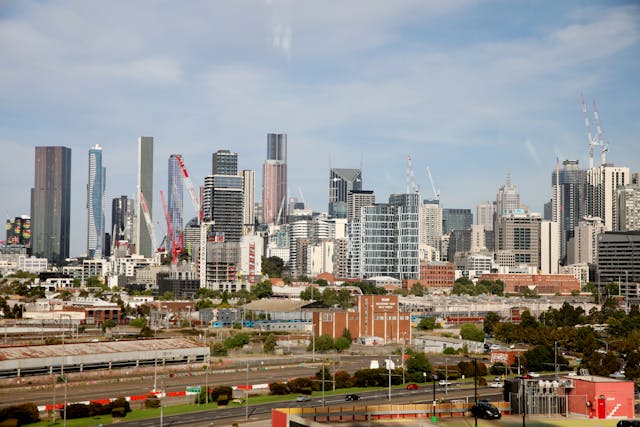
Photo: View of Melbourne's skyline. Bhullar Graphic (Pexels)
There is one more wrinkle worth knowing. Building ministers have agreed to pause further residential NCC changes until around 2029, which means the substantial action in this edition sits squarely in commercial and multi-residential buildings. That is exactly where most specification decisions are made.
The practical upshot: Australia is now operating in a dual-code environment. A facade system specified in Canberra and the same system specified in Sydney may be assessed under different editions of the code. Architects know this, and it is making product compliance questions louder, not quieter.
The four changes that matter most for specified products
1. Mandatory on-site solar PV for commercial buildings
This is the headline change. Under the new Clause J9D5, new Class 3 and Class 5 to 9 buildings must install solar PV at construction, not just leave roof space for it later. Compliance means covering 100% of available roof space or hitting a minimum output per square metre of conditioned floor area, whichever is smaller.
There is a sting for gas too. Buildings that retain gas for heating or hot water must offset those emissions with additional PV capacity, which is pushing more projects toward all-electric design.
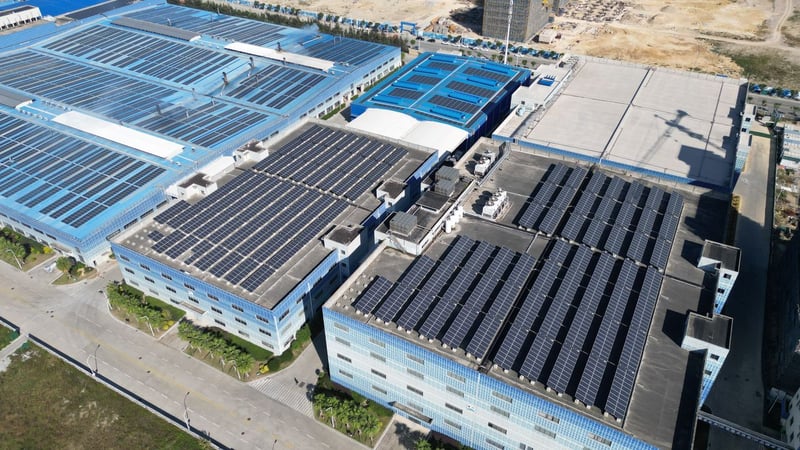 Photo: Solar PV panels covering a commercial building roof as required under NCC 2025 Clause J9D5. Nova Iv.
Who should be paying attention: Solar and renewables suppliers, obviously. But also roofing manufacturers (PV layout now competes with plant for roof real estate), electrical and switchboard suppliers (all-electric buildings need bigger infrastructure), and heat pump and hot water system manufacturers, who just became the path of least resistance.
2. Tighter waterproofing and water management
Leaky buildings have been one of the industry's most persistent and expensive defect categories, particularly in apartments. NCC 2025 strengthens water management provisions for complex and multi-residential buildings, alongside new condensation management requirements driven by a decade of moisture-related defects in well-sealed homes.
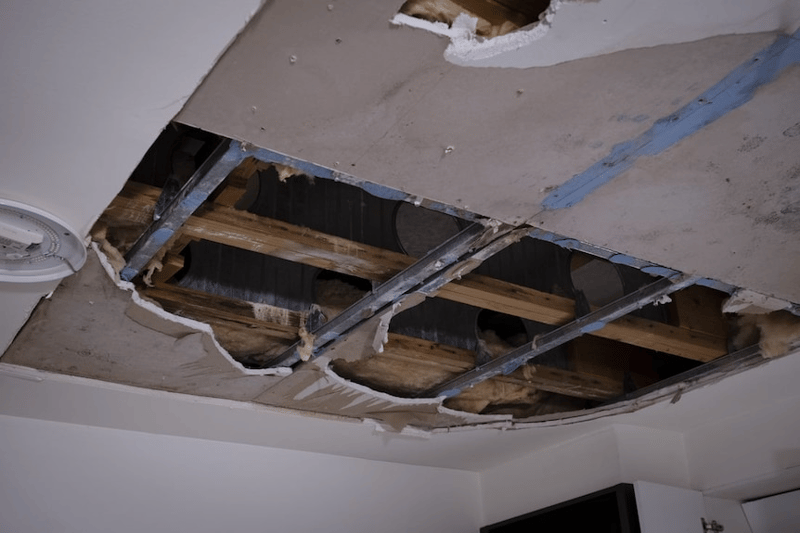
Photo: Melbourne apartment ceiling damaged after water leaked from the balcony above it.
Who should be paying attention: Waterproofing membrane and sealant suppliers, flooring manufacturers (substrate moisture and wet area detailing flow directly into flooring specs), facade and cladding suppliers, and ventilation product manufacturers.
3. Carpark fire safety steps up
Open-deck carparks now require sprinkler protection unless they are standalone structures, and some previously available fire-resistance concessions have been wound back. The driver is the changing fire load in carparks, including EVs and larger vehicles.
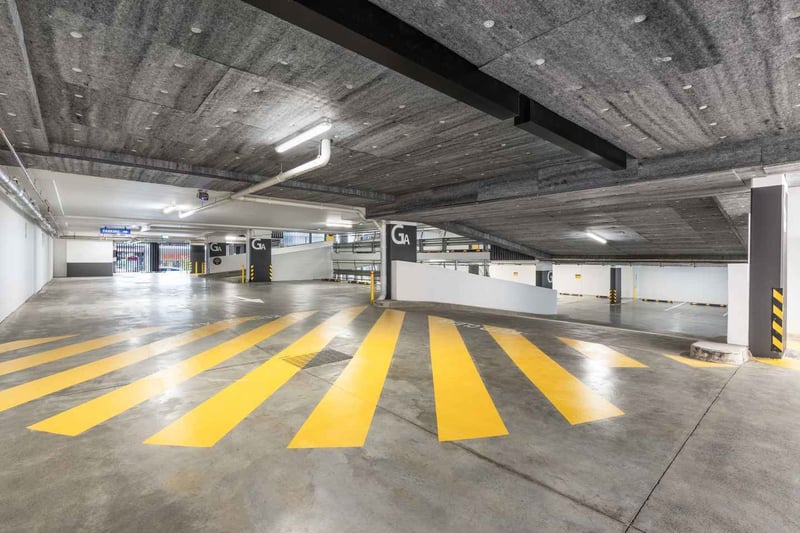
Photo: Multi-Level Deck Carpark, Rowe Street, Eastwood, NSW
Who should be paying attention: Fire protection and sprinkler system suppliers, passive fire product manufacturers, and structural and facade suppliers whose products carry fire performance claims. If your product has an FRL attached to it, expect more questions.
4. Commercial energy efficiency gets serious
Beyond solar, Section J tightens across the board. Building fabric requirements have stepped up, including new thermal emittance rules for roofs and stricter solar admittance criteria for wall-glazing constructions. Buildings must also be designed for future electrification, with switchboard space, risers and plant space that allow gas systems to be swapped out later.

Photo: 1 Bligh St, Sydney NSW
Who should be paying attention: Glazing and window suppliers, insulation manufacturers, HVAC and mechanical services suppliers, and lighting manufacturers. Performance data that was a nice-to-have under NCC 2022 is now the difference between making a spec and missing it.
Why this is a supplier opportunity, not just a compliance headache
Every code change creates the same pattern. Architects and specifiers suddenly need updated information, and the suppliers who provide it first earn trust that outlasts the transition.
Right now, A&D professionals are asking:
- Which of the products I usually specify still comply under NCC 2025?
- What new performance documentation do I need on file?
- Which suppliers can actually answer my Section J, waterproofing or fire questions?
If your product sits in solar, facade, glazing, flooring, fire protection, insulation or building services, this is your moment to be the answer. That can look like updated technical documentation and compliance statements, CPD content that walks specifiers through the changes in your category, or face time with architects while the questions are still fresh.
The suppliers who treat NCC 2025 as a marketing moment, not just a compliance exercise, will own the conversation through the transition and into the 2027 adoption dates in NSW and Queensland.

Photo: Building product suppliers talking to architects and specifiers at The-Arc Event